CASE SUMMARY
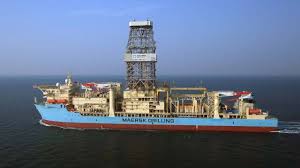
Tax Law Alert: MAERSK DRILLSHIP IV SINGAPORE PTE LTD. vrs COMMISSIONER GENERAL (GRA)
Suit No: Civil Appeal: J4/59/2024
Court: Supreme Court of Ghana
Background of the Case
Maersk Drillship IV Singapore PTE Limited is a company incorporated under the laws of Singapore and registered in Ghana as an external company. In 2005, the Government of the Republic of Ghana (GoG), the Ghana National Petroleum Corporation (GNPC), and Heliconia Energy Ghana Limited entered into a Petroleum Agreement concerning the Offshore Cape Three Points (OCTP) Contract Area within the Republic of Ghana for thirty (30) years. This Petroleum Agreement was ratified by the Fourth Parliament of the Fourth Republic on 15 March 2006 in accordance with the 1992 Constitution.
Heliconia Energy Limited assigned its interest under the Petroleum Agreement to ENI Ghana Exploration and Production Limited (ENI) as the new contractor. Subsequently, ENI entered into a Subcontract Agreement with Maersk Drillship IV PTE Ltd for the provision of services at the Deepwater DP Drilling Rig for forty-two months, commencing on 1 July 2015, or no later than 31 July 2015, to December 2017. Maersk Drillship obtained permits from the Petroleum Commission of Ghana to operate as an Upstream Petroleum Service Company in Ghana between January 2015 and December 2017, as a petroleum subcontractor to ENI. Maersk Drillship affirmed that it utilized rigs and a rig team exclusively within the OCTP block in Ghana from January 2015 to December 2017.
The Ghana Revenue Authority (GRA) initiated a tax audit into the affairs of Maersk Drillship for the period 2015 to 2018. On 20 November 2020, the GRA issued a final tax audit report, detailing a total tax liability of US$28,627,295.54, comprising US$20,185,531.36 in direct tax liability and US$8,441,746.18 in indirect tax liability. Discontented with the assessment, Maersk Drillship filed an objection. After careful consideration, the GRA issued its final objection decision on 27 September 2021, with a revised total tax liability of US$28,357,065.17, consisting of US$19,915,318.99 in direct tax and US$8,441,746.18 in indirect tax. The direct tax included Pay-As-You-Earn (PAYE) of US$103,300.22, a penalty of US$427.75 for late PAYE filings, withholding tax of US$336,708.49, Corporate Income Tax of US$2,370,959.33, and Branch Profit Tax of US$17,103,923.20. The indirect tax comprised US$789,697.22 in VAT relief purchase orders, US$51,544,901.23 in Output VAT/NHIL, and a VAT/NHIL liability of US$8,441,764.18.
Following the GRA’s objection decision, Maersk Drillship filed an appeal at the High Court, which was dismissed. Its subsequent appeal to the Court of Appeal was also unsuccessful, leading Maersk Drillship to file another appeal before the Supreme Court.
Supreme Court’s Decision
On 31 January 2024, Maersk Drillship filed a Notice of Appeal to the Supreme Court, citing the following grounds:
- The judgement of the Court of Appeal was contrary to the weight of the evidence;
- The Court of Appeal formulated unrelated issues without fully and effectively determining the grounds of appeal and the real issues in dispute;
- The Court of Appeal imposed branch profit tax in violation of Section 39(3) of the Petroleum Income Tax Act,1987, PNDCL 188 and the fiscal stability clause in the Petroleum Agreement;
- The Learned Justice of the Court of Appeal applied general tax laws to petroleum operations in contravention of Section 39(5) of the Petroleum Income Tax Act, 1987, and the fiscal stability clause in the Petroleum Agreement; and
- The Learned Justice of the Court of Appeal misapprehended and misapplied the principle of Ghanaian Permanent Establishment.
Key Arguments from Maersk Drillship
- I. The Petroleum Income Tax Act, 1987 (PNDCL 188) is the governing income tax law applicable to the petroleum operations of Maersk Drillship throughout the thirty-year duration of the Petroleum Agreement (“PA”). This remains the case regardless of any subsequent amendments, and even if PNDCL 188 is repealed during the PA’s lifespan, its provisions will continue to apply unless an event listed under Section 135(2) of the Income Tax Act 2015 (Act 896) occurs.
II. Section 39(3) of PNDCL 188 explicitly states that no tax should be levied in the form of dividends, whether paid out or arising from income under PNDCL 188. Additionally, since PNDCL 188 governs upstream petroleum operations, branch profits which is akin to dividends, should not be subjected to branch profit tax. It was argued that the fiscal stability clause in the PA ensures the provisions of Act 188 remain in force, thereby nullifying the applicability of Act 896 as a new law.
III. Counsel for Maersk Drillship contended that the registration of an external company does not equate to the incorporation of a new company but rather signifies the same entity operating in a different jurisdiction. In contrast, a subsidiary is an incorporated company with a legal personality separate from its parent company. However, the Court of Appeal failed to consider this distinction, which led to its erroneous conclusion that the tax treatment of Maersk Drillship’s registered external company was not governed by the PA.
IV. The Court formulated unrelated issues and relied on provisions of Income Tax Act 2015 (Act 896) and Companies Act 2019 (Act 992) in its decision, thereby undermining the soundness of its judgment. Furthermore, the Court applied new laws to impose tax on the Company, contrary to the terms of the fiscal stabilization clause in the PA.
V. Lastly, the Court of Appeal held that the Company’s income was derived from investment, which was not the case. According to Maersk Drillship, the income was generated from works and services under the PA.
GRA’s Position
- I. The Ghana Revenue Authority (GRA) contended that the authority to exempt a person from liability is vested exclusively in Parliament under the provisions of Article 174(2) of the 1992 Constitution. Furthermore, branch profit tax is not part of the income exempted from tax under both PNDCL 188 and the PA.
II. Moreover, Section 39(3) of PNDCL 188 has been expressly repealed by the Internal Revenue Act, 2000 (Act 592) under Section 168(1)(a) and therefore ceased to have legal effect upon the enactment of Act 592 in 2001. Section 39(5) of PNDCL 188, which was applicable during the PA, grants the GRA the authority to apply general tax law to impose other taxes not covered by PNDCL 188.
III. Additionally, even if the court favours the Company’s position that Act 896, rather than PNDCL 188, is applicable to the PA, it will not affect the assessment of the tax liability. The stability clause granted by the State was exclusively to the contractor (ENI) and does not extend to cover subcontractors such as Maersk Drillship, as they are not expressly mentioned as beneficiaries of the stability clause in the PA.
IV. Although the parent company and the branch (Permanent Establishment) are the same under the corporate structure, for tax purposes, they are treated separately as distinct entities in determining their chargeable income. As a Permanent Establishment, Maersk Drillship is required to withhold 8% as withholding tax on branch profits tax in accordance with the Income Tax Act 2015 (Act 896).
Supreme Court Orders
- By a 3:2 majority, the Supreme Court upheld Maersk Drillship’s appeal and overturned the concurrent decisions of the two lower courts.
i. The Supreme Court held that the Court of Appeal was simplistic in categorizing the issues for determination under whether the income was the subject matter of the present dispute, whether the income in dispute was assessable income and whether the income in dispute was exempt income.ii. The Court further held that regardless of the simplification of issues, the Court of Appeal was not deprived of identifying all relevant issues, including those submitted by the Maersk Drillship since it examined all pivotal issues raised by Maersk Drillship. However, the Court of Appeal did not find merit in the second ground of appeal, which was subsequently dismissed.
iii. The Supreme Court established that Article 12.1 of the PA which warrants that “no tax ,duty ,fee or other will be imposed by the State or any political subdivision on the Contactor, its Subcontractors or affiliates under activities relating to petroleum operations and to the sale and export of petroleum” affirms Maersk Drillship as a beneficiary under the PA, hence, taxes mentioned in this clause are not applicable to the company by virtue of the tax exemptions embedded in the PA. These tax exemptions must be upheld and respected by the contracting parties and the domestic courts of the host country unless subsequent agreements sanction their discontinuance.
iv. The Court was of the opinion that it was undoubtedly clear that the two lower courts’ imposition of branch profit tax on the Company under the Income Tax Act 2015 (Act 896) was erroneous. In addition to the 5% withholding tax, the PA expressly stated the taxes the Company is required to pay and the tax legislation that Maersk Drillship was subjected to.
v. The Court affirmed that a critical scrutiny of Article 12 of the PA reveals that the parties did not agree to the imposition of branch profit tax on the income of Maersk Drillship. Therefore, the imposition of branch profit tax breaches the PA. Further, the PA stipulates that, apart from the agreed-upon taxes, the Republic of Ghana will not impose any other taxes.
vi. The Court stated that the provisions of PNDCL 188 specifically regulate the taxation of income earned through operations related to petroleum activities. In interpreting this, the provisions of the general law, the Income Tax Act, 2015 (Act 896), must yield to the provisions of the special law (PNDCL 188).
vii. The Court finally held that establishment of a permanent place of business in Ghana by an external company does not imply that the external entity in Ghana is incorporated in Ghana and thus has a different personality from its parent company. It was opined that an external company registered in Ghana is not technically different from its parent company incorporated abroad. Therefore, Maersk Drillship as an external entity registered to conduct petroleum business in Ghana is not distinct from its parent company incorporated in Singapore, and recognized as the subcontractor under the PA.
The Supreme Court directed the Ghana Revenue Authority (GRA) to do the following:
i. Issue a revised tax assessment from 2015 to 2017 years of assessment; and
ii. Refund any excess or tax credit arising from the revised tax assessment within 30 days from the date of the judgement.
Key Takeaways
- i. Fiscal stability clauses protect investors from unexpected regulatory or tax changes. This rule reinforces their enforceability, signaling to investors that contracts with host Governments can be legally upheld.
ii. The Petroleum Agreement between the Parliament of Ghana and a contracting party has binding legal force and serves as the primary fiscal framework for the parties.
iii. An external company registered in Ghana is legally considered as an extension of its parent company abroad and not a distinct company. This unified corporate structure influences how tax liabilities and legal responsibilities are allocated, which may impact the operations and financial obligations of multinational companies doing business in Ghana.
iv. The Supreme Court’s ruling on Branch Profit Tax (BPT) could trigger fresh litigation and prompt a re-examination of decided or ongoing cases involving petroleum branches whose activities are regulated by Petroleum Agreements containing provisions similar to those in the present case.
v. Where a Petroleum Agreement contains a fiscal stability clause, subsequent laws enacted after its ratification cannot be used to impose additional taxes on income derived from petroleum operations.
Conclusion
The Supreme Court allowed the appeal of Maersk Drillship IV Singapore PTE Limited, setting aside the concurrent decisions of the High Court and the Court of Appeal.